Last Updated on August 8, 2026 by Matthew Hallock
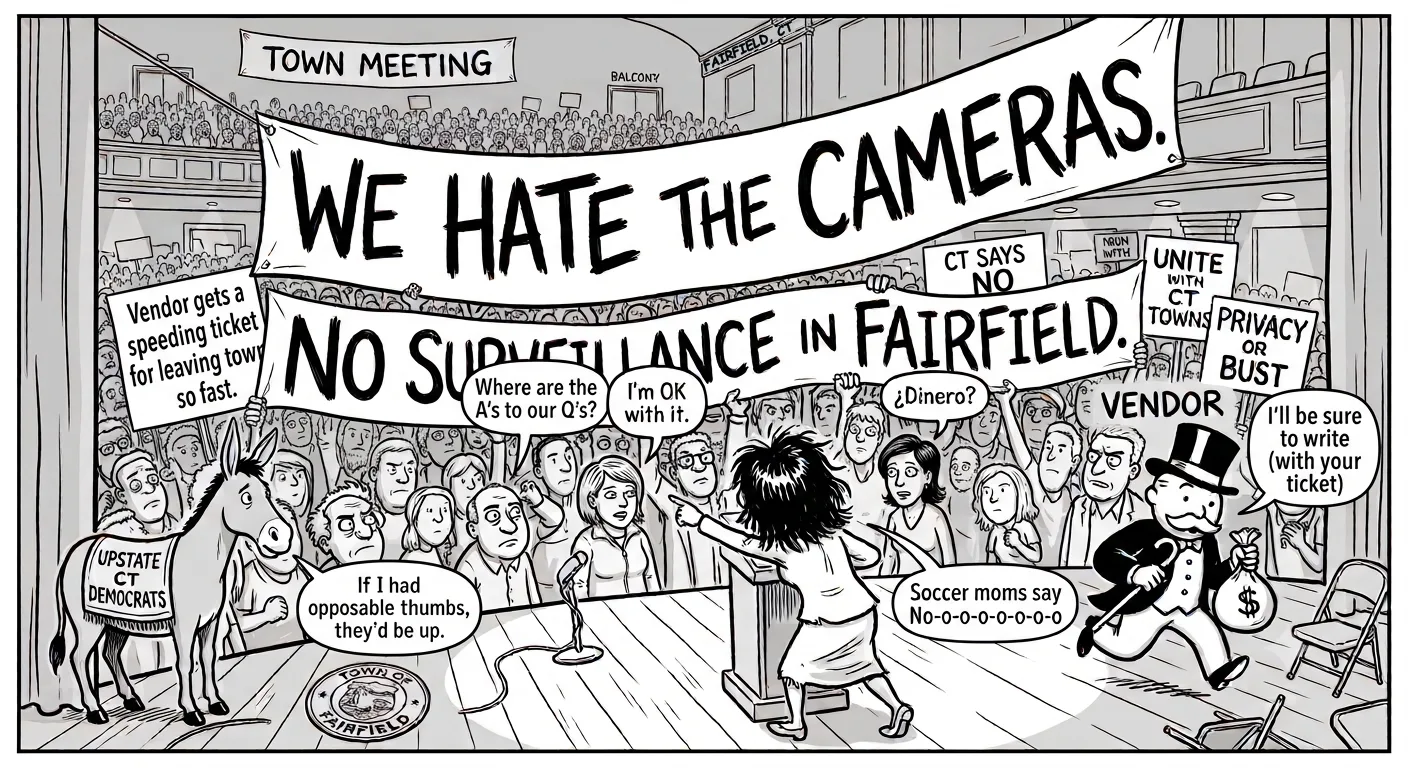 FAIRFIELD, CT —What was pitched as a safety measure has officially unraveled into a rejection of automated surveillance. Faced with sustained community outrage, lawsuits from the ACLU and other rights groups, fierce criticism over the lack of transparency and public input, cybersecurity, vendor profits and the approval process of the contracts themselves, CT Governor Ned Lamont on Friday called for an immediate statewide halt to new deployments of speed cameras and automated license plate readers (ALPRs). The Governor’s order directs the Connecticut Police Officers Standards and Training (POST) Council to conduct a 30-day review to audit privacy safeguards, data retention limits, and corporate data sharing before any further hardware goes live.
“I am in agreement with the many residents across Connecticut who are seeing this technology being implemented by their towns and are wondering what types of privacy protections are being implemented… we must have clear policies in place regarding what is happening with this data, who has access to it, and how it can be used.” — Governor Ned Lamont

The announcement comes as pushback against automated traffic enforcement reaches a boiling point around the state and across the country. Several CT towns rejected the program outright, while municipal officials in Fairfield, Milford, and elsewhere were forced to defend it to a chorus of denunciations from residents.
Much has been made of the fact that automated speed and license plate cameras do not merely capture plate numbers — they aggregate location data, driving habits, time-stamped movement logs, and by extension, Personally Identifiable Information (PII). When handled by third-party vendors without transparent municipal oversight or audit trails, these networks present significant cybersecurity vulnerabilities and individual privacy concerns. The ACLU’s 4th amendment claim essentially states that it is unconstitutional to capture a driver’s infomation when they haven’t done anything wrong.
With the state-mandated 30-day freeze now active, municipal leaders in Fairfield must look at a new path forward. One suggestion is to use the cameras for the next 90 days to conduct a definitive traffic study for the town. The Voice will track the POST Council’s upcoming guidance, monitor municipal compliance at Town Hall, and ensure full transparency as this surveillance review unfolds.