Last Updated on August 5, 2026 by Matthew Hallock
Hear the Video
RECLAIMING OUR HOME
When in the course of municipal governance, a town’s administrative structure quietly shifts away from direct citizen accountability, the people must exercise their inherent right to self-preservation. Fairfield stands at a historic crossroads. We now choose between two starkly different futures: an unaccountable corporate dystopia or a self-governing community utopia. This document serves as our modern declaration. These are the 13 foundational questions and background briefs that form the People’s Referendum. We present a positive vision for local sovereignty, returning power directly to our neighborhoods, protecting our private data, and preserving our financial transparency.
#1: Digital Sovereignty & Data Confinement: Shall we keep our secrets within our own borders? Must the private habits of our citizens be whisked away to the dark vaults of some foreign cloud? Let our village elders keep our data, not a corporation in another land.
Background: Citizens depend on the government to keep their Personally Identifiable Information (PII) secure. Outsourcing citizens’ data to third-party corporations increases the risk of surveillance and unauthorized access. For cybersecurity safety, we must keep all municipal records remain local, within our own town-managed systems. This ensures that citizen data remains private and can only be accessed by authorities through a legitimate, court-ordered warrant.
#2: Consent for Automated Camera Networks: Shall we permit the unblinking eye of the machine to watch our every passage? If we desire a road free from the intrusion of automated tyrants, let us say so now.
Background: Large-scale surveillance projects shouldn’t be forced on the community by administrative decree. This question gives residents a direct vote on whether they want automated camera networks or a focus on traditional, human-centered policing. By voting directly, we ensure our local safety tools align with the actual values and consent of our neighborhoods.
#3: Directing Data to Accountable Town Services: Shall the fruit of our municipal data be used for the public good, or merely as a bludgeon for the constabulary? Let our numbers serve the civil servants, not the king’s treasury.
Background: Public safety data should be used to improve infrastructure and community care, not for revenue collection. Routing this information through Town Services ensures it is handled by civil administrators focused on health and logistics. This approach separates data collection from law enforcement databases, protecting privacy while optimizing town resources.
#4: Empowering Local Health & Safety Officers (HSOs): Shall the power of the neighborhood be restored to the people who dwell therein? Let us dismiss the distant overseer and appoint from among our own ranks the keepers of our safety.
Background: Real safety comes from community involvement rather than remote monitoring. We propose replacing automated surveillance with local Health & Safety Officers (HSOs) appointed by their neighborhoods. This model prioritizes the welfare of residents over automated fines and gives individual districts control over the safety of their own streets.
#5: Reinstituting the Leadership Residency Rule: Must those who command our safety reside in the very lands they claim to protect? It is but common sense that a Captain should know the waters he sails.
Background: Public safety leaders should be members of the community they serve. Recent changes to the Town Charter increased the residency limit for top brass to 35 miles away, distancing them from daily life in Fairfield. Reversing this ensures our leadership is locally invested and available to respond immediately during a crisis, keeping their interests aligned with our town’s safety.
#6: Financial Consolidation of Autonomous Authorities: Shall we permit the Parking Authority to hide its chest of gold away from the light of day? Let every coin be brought into the public’s account, from where it came.
Background: Financial transparency is essential for accountable government. The Parking Authority currently manages its own separate accounts, which can lead to “shadow budgeting” outside the public eye. To ensure proper oversight, all revenue collected on public property instead should flow through the central town treasury where it can be audited and managed openly.
#7: Dissolution of the Standalone Traffic Authority: Shall we abolish the un-elected Traffic Authority, that nest of hidden power? Let the people’s representatives debate our roads in the open light.
Background: Independent authorities often insulate decision-makers from voter accountability. When an unelected board makes traffic policy, it’s difficult for citizens to influence the outcome. Dissolving this standalone authority brings infrastructure debates back to the RTM, where elected representatives must answer to their constituents for the choices they make.
#8: Choosing Andy Griffith Over Robocop: Shall we choose the wisdom of the neighborly constable and his lovable deputy over the cold heart of the mechanical enforcer? Let us choose the path of humanity.
Background: This choice determines our town’s policing philosophy. The “Robocop” approach views our roads as profit centers for corporate tech vendors. In contrast, the “Andy Griffith” model uses local officers who know their neighbors and focus on solving community problems through direct engagement rather than relying on automated ticketing loops.
#9: Utilizing Local Retired Residents for the Special Force: Shall the ranks of our local protectors be filled by our own retired citizens, as is the tradition of our fathers? Let us prefer the man who has spent a lifetime in these streets over a stranger hired for mere profit.
Background: Fairfield’s Special Police should be a way for local residents to serve their own town. Historically, this force was composed of retired Fairfield citizens who brought years of local knowledge to the job. Current policies have shifted toward hiring out-of-towners, and we believe it’s time to return to a model that prioritizes the experience of our own community members.
#10: The Repatriation of Our Digital Record: Shall the town demand the immediate repatriation of all data now languishing in the insecure ether of remote corporate clouds, mandating that said records be archived under the direct, watchful custody of local Town Services, and forever shielded from prying eyes unless compelled by a lawful order from the magistrate?
Background: Our digital records currently sit in remote corporate clouds beyond our direct control. To ensure the highest level of security, the town must bring this data back to local servers managed by Town Services. This protects our archives from external surveillance and ensures they are only accessed on a case-by-case basis with a warrant.
#11: Real Engineering Solutions Over Perpetual Vendor Studies: Shall we end the practice of the ‘revolving door,’ where the very man who discovers a hole in our roof is the one paid to patch it? Let those who counsel us be barred from profiting from the cure.
Background: Traffic safety should be solved with engineering, not endless consulting contracts. Currently, outside vendors are often paid to study “problems” and then hired to implement the expensive solutions they proposed. We need to stop this cycle and use public funds for permanent, physical safety improvements designed by accountable town engineers.
#12: Consolidated Local Management of All Three Railroad Stations: Shall we unite the management of our three rail stations under one roof? A house divided cannot stand, and fragmented governance serves only to confuse the traveler.
Background: Oversight of Fairfield’s three train stations is currently fragmented across different agencies, making it hard to implement a cohesive plan. Unifying management under a single local framework will improve service, allow for better community initiatives, and ensure that all commuter revenue is transparently tracked in the town budget. It will also facilitate the establishment of Fairfield Park atop the downtown RR parking lot, Black Rock Park atop its parking lot, and Sasco Hill Park where the Mill River crosses US 1.
#13: Ending False Advertising & Mandating Clean Government Transparency: Shall the Town be compelled to speak only the plain truth? Let no official hide behind deceptive pamphlets; let the raw numbers be presented to the people.
Background: Clean government requires honesty in how programs are presented to the public. Local governments should never use marketing tactics or cherry-picked data to sell a policy to its residents. This mandate ensures the town provides clear, unvarnished information, allowing citizens to make decisions based on the raw facts.
THE FINAL SUMMONS: RECLAIMING THE COMMONS
These thirteen pillars of common sense are not merely suggestions; they are the steel and stone of our neighborhood sovereignty. They stand as a righteous hammer against the Hartford shadow government, ready to shatter the chains of corporate dependency and restore the crown of stewardship to the people. Security is not a commodity to be bartered away to distant masters or buried in the dark, digital pits of a foreign cloud. It is a fire kindled in our own hearths, guarded by our own kinsmen, and sustained by our own treasury. The hour of decision is upon us! Carry this blueprint through every lane and tavern. On Tuesday, July 14th, let our lanes echo with the thunder of a free people. Stand now, or forever hold your peace under the yoke of the overseer. Cast your verdict and reclaim your town!
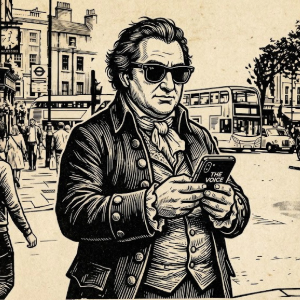
About the Author: Thomas Paine InTheRear: A humble son of Fairfield, possessed by a spirit of liberty and a sharp wit. Finding the labyrinth of modern governance most vexing, he has taken up the pen to restore the rights of the citizenry and common sense to the local square.